Friday, September 19, 2014

Readers Write

“Rewards and Recognition: Are You Doing Enough to Acknowledge Employees’ Hard Work?”, our September 2nd Astronology article, generated quite a buzz!  Loyal reader Richard Virgilio of Intrepid HR Consulting shared his thoughts with us via e-mail:

I find the comment of how "one size fits all" is not likely true for a Total Rewards program to be absolutely not true in every case. Whenever someone, whether a vendor or an internal manager, offers a "one size fits all" solution, it is likely to be simplistic, shallow, and fraught with great credibility risk. If "one size fits all," why would there be any need for sizes? As business partners, HR professionals need to have a definite "early warning system" with many indicators and appropriate metrics. Early action when alarm bells sound for what should have been a "comprehensive" or "exhaustive" or "everybody wins" solution to an issue is vital to a thriving company and HR department.


Thanks for writing, Rich, and thank you for sharing your feedback!  Red flags should accompany “one size fits all” mentions in discussions.

Wednesday, September 17, 2014

The Astron Road Show

Business Council of New York 2014 Annual Meeting
Make your plans now to attend The Business Council’s Annual Meeting at The Sagamore Resort on Lake George, September 17 - 19.  The meeting will feature a robust agenda spread across all three days.  New this year will be panels on promoting corporate board diversity, corporate social responsibility, the state’s new energy and tax policies, and the business issues that drive professional sports.  Astron is proud to support this event, click here for more information.
New York State SHRM Conference
Have you wondered how you can engage your employees in a new and innovative way? One avenue organizations are exploring is Gamification.  Astronology discussed the growing popularity of gamification in a previous article. On September 28-30, 2014 Michael Maciekowich will be a guest speaker in Buffalo, NY at the New York State Society for Human Resource Management’s annual conference. Michael Maciekowich will be speaking on Gamification and the use of it in Human Resources. Register today to hear him speak!
2014 Upstate NY Healthcare HR Conference
From October 8 – 10, The American Society for Healthcare Human Resources Association (ASHHRA) Upstate New York Healthcare Human Resource chapter will be hosting its annual conference. The Astron team will be in attendance and look forward to seeing many of our friends in the Healthcare industry! The conference will be located at the Woodcliff Resort & Spa in Fairport, NY.
Wisconsin State SHRM Conference
Looking for a way to gain more knowledge on HR topics and policies? The Wisconsin State Society of Human Resource Management will be holding its conference at the Monona Terrace Convention Center in Madison, Wisconsin. The conference will be held October 15-17, 2014. In addition to exhibiting, Michael Maciekowich will present “Gamification in Human Resource Management: An Introduction.” He looks forward to seeing you!
As you can see Astron will be on the road several times throughout the summer and into the beginning of fall. Will you be near any of these locations? Consider stopping by and saying hello to the Astron team! For future updates on Astron’s travels, check out our Astron Roadshow page!

Tuesday, September 16, 2014

2015 Compensation Budgeting Preview


Moving towards 2015, Human Resource professionals are once again faced with many uncertainties that may have a dramatic impact on compensation program administration.  First, there are the mid-term elections in November.  A shift to a Republican majority in both the House and the Senate would create a stalemate in Washington, D.C. in terms of new legislation that would impact human resources, especially compensation program administration.  Second, chaos around the world and the continued threat of terrorism’s impact on the global economy creates an uncertain environment within which we must plan and operate effectively.

United State Economic Forecast for 2015
The key to understanding 2015 compensation budget predictions is to first understand the 2015 economic forecasts. According to Business Insider (http://www.businessinsider.com/ubs-2015-us-gdp-forecasts-2013-10#ixzz3D6YfLSNJ):

"Despite a slow economic recovery through 2013, U.S. growth still is expected to pick up…After currently forecast 3.0% growth in 2014, we now project 2015 growth to also be 3.0%...Central to their accelerating growth thesis is the idea that the fiscal drag will become less and less onerous.  And this will be offset by a Federal Reserve that begins to tighten monetary policy. This is a theme we expect to be common across most economic forecasts. Indeed, UBS's 3% growth expectation represents the median expectation among Wall Street economists. By mid-2015, we expect the Fed to start gradually raising the Federal funds rate to 0.75% by the end of 2015. In this setting, the benchmark yield on the 10-year Treasury note is projected to rise to 3.2% by the end of next year and 3.5% by the end of 2015. UBS warns prolonged fiscal restraint would certainly be bad news. Furthermore, Obamacare could discourage hiring by small businesses.
United States Compensation Budgeting Forecasts for 2015
With this economic perspective as a backdrop, it is not surprising to see most, if not all, of the major consulting firms and associations with similar predictions for 2015 compensation budgeting. The following is a summary of these predictions.
The Hay Group (www.haygroup.com):
Hay Group expects the 3 percent median base salary increase to hold steady across most U.S. industries, including chemical, consumer products, financial services, health insurance, industrial goods and utilities. Two sectors, however, have different expectations: Oil and gas industry employees can expect a median base salary increase of 4 percent and Hospital employees can expect an increase of 2 percent for most employee groups. More employers expect to tie reward programs to performance-management practices. These programs include increasing future emphasis on improving variable-pay programs (56 percent of respondents) and improving key non-financial rewards such as career development opportunities (63 percent).”
Mercer (www.mercer.com):
In its latest study, Mercer points to the following five year trend:


Mercer further comments that:
“As organizations strive to balance reward programs with budgets and the need to retain critical talent, they are analyzing key segments of their workforce and concentrating rewards on top performers. Consequently, the range between increases to high-performing employees and those given to lower performing employees continues to widen. Mercer’s survey shows the highest-performing employees received average base pay increases of 4.8% in 2014 compared to 2.6% for average performers and 0.1% for the lowest performers.”

WorldatWork (www.worldatwork.org):
Following is an excerpt from WorldatWork’s latest salary budget survey:

“‘Salary increase budgets will likely remain close to the 3.0 percent mark until market forces require employers to raise wages more aggressively,’ said Alison Avalos, research manager for WorldatWork. ‘Recovering from the recession is no longer driving employers’ salary budget planning. Current salary budget increase amounts are less about a recovery from widespread pay freezes from a few years back and more about the current marketplace not demanding much growth in the size of pay increases for employees.’ Organizations continue to converge on budget amounts between 2 percent and 4 percent, with 85 percent to 90 percent of all organizations landing there, depending on employee category. The percentage of organizations not awarding increases has dropped to 2 percent to 5 percent, fairly close to historical levels.”

Total U.S. Salary Budget Increases
Employee Category
Actual 2014
Mean
Actual 2014
Median
Projected 2015
Mean
Projected 2015
Median
Nonexempt hourly nonunion
2.9%
3.0%
3.0%
3.0%
3.0%
3.0%
3.0%
3.0%
Exempt salaried
3.0%
3.0%
3.1%
3.0%
Officers/executives
3.0%
3.0%
3.1%
3.0%
All
3.0%
3.0%
3.1%
3.0%
Source: WorldatWork 2014-2015 Salary Budget Survey, preliminary findings.

http://www.shrm.org/hrdisciplines/compensation/articles/pages/2015-salary-budget-forecasts.aspx#sthash.sOv2leaA.dpuf

Astron’s Perspective
One key issue not reflected in these predictions is the compensation budget impact of the move to increase both the national and states’ minimum wages. The following is a summary of the upcoming minimum wage changes scheduled for 2015, as reported by Business & Legal Reports (www.blr.com):
State minimum wage changes effective December 31, 2014:
·         New York: $8.75 (See additional increase effective December 31, 2015)
·         West Virginia: $8.00 (See additional increase effective December 31, 2015)
State minimum wage changes effective January 1, 2015
·         Connecticut: $9.15
·         Hawaii: $7.75
·         Maryland: $8.00 (See additional increase effective July 1, 2015)
·         Massachusetts: $9.00
·         Rhode Island: $9.00
·         Vermont: $9.15
State minimum wage changes effective June 1, 2015
·         Delaware: $8.25
State minimum wage changes effective July 1, 2015
·         Washington, D.C.: $10.50
·         Maryland: $8.25
State minimum wage changes effective August 1, 2015
·         Minnesota: Large employers $9.00; Small employers $7.25
State minimum wage changes effective December 31, 2015
·         New York: $9.00
·         West Virginia: $8.75
The above changes, coupled with the US Federal Minimum Wage for Federal Contract Employees at $10.10 per hour, up from the current $7.25, will have a hidden impact on compensation budgeting.  Increases in federal and state minimum wages create compression and a domino effect on pay grade & range structures.  An organization that had set its lowest pay grade minimum at $7.25, and employers with federal contract workers, will have to raise that grade minimum by $2.85, or 39%. In New York State, the minimum wage on December 2015 will increase (in two steps) from the current $8.00 to $9.00, or 12.5%. Those employees in the lower pay grades will have to have their pay rates adjusted to avoid pay compression.  In addition to the bring to minimum adjustments necessary for employees currently in the lowest pay grade, attention should be paid to the salaries of employees in higher pay grades, to avoid compression with the lowest wage earners.

There’s a lot to keep in mind as you begin your 2015 compensation budgeting.  With the uncertainty both home and abroad, maintaining and updating one’s pay structures is more than a “plug and play” activity.  Rather, employers must keep a strategic perspective, not only on the pay range and annual salary adjustments, but also on the use of variable compensation and pay for performance tools, to effectively reward the truly high performers, the employees who make the difference between an organization going through the motions and organizational success.

Monday, September 08, 2014

A Not-So-Pleasant Look at HR

We do a pretty good job on this blog at staying cheery and positive, but once in a while, it's good to look at the bad. LinkedIn has a lot of great post by the Influencers and this was certainly one of them from Alan Collins.

He starts off in the most cheery of ways: "No matter what you do, someone is going to criticize and distrust you -- and many will hate you, even if they don't know your name."

But isn't that true of a lot of jobs, especially support roles like Legal, Compliance, and, of course Human Resources. But he gives some good advice, including this one:
2. Replace no's with options (lots of them), whenever you can. 
Let’s say your client is concerned about his three best people and wants to increase their pay beyond reason, in order to retain them. 
In this case, don't respond with just a flat out no. Meet with him on his turf to brainstorm alternative, creative solutions that address his real need: retention. For example, could you keep these top performers by creating an opportunity to improve their skills so they might be promoted (with higher pay) more quickly? Can you restructure their jobs to give them even more recognition, freedom and autonomy in making decisions? Can you enhance their work life by providing flexible work schedules, remote working arrangements or more time off? 
Strive for win/win solutions. It's not always possible, but work hard with your clients to come up with alternatives that both you and they can embrace.
The best thing you can do at work is include your co-workers in the decision process (where appropriate). No one wants decisions made for them, especially when that decision influences their wallet, their works status or their future. Keep them in the loop and strive for their respect--because the truth of the matter is not everyone will like you...and that's okay.

Tuesday, September 02, 2014

Rewards and Recognition: Are You Doing Enough to Acknowledge Employees’ Hard Work?

Forbes reported in 2012 that there is a $46 billion market for employee recognition programs. With it being such a huge market, clearly employee recognition is important for every organization to consider. Research from Bersin indicates that in “organizations where recognition occurs, employee engagement, productivity and customer service are about 14% better than in those where recognition does not occur.” With our interest piqued, Astronology will dig deeper into the topic of employee rewards and recognition, and explore best practices for these programs.

Employee recognition programs can vary, from the very simple and inexpensive to the elaborate.  No matter where your organization falls on that continuum, the stakes are high when considering the impact of a low recognition culture on an organization’s bottom line.  What are some consequences of ignoring the need to recognize employee contributions? 
  • Low productivity and low performance
  • Negative attitudes and a poor team culture
  • Increased absenteeism
  • Low employee retention rates and increased turnover rates           

It’s safe to assume that no organization would like to have to address and reverse any of these issues. And yet, doing something doesn’t mean that it will be a success.  Even more unsettling is learning that you can have a rewards and recognition program and still not meet the needs of employees. How so?

Susan M. Heathfield’s article featured on About.com points out that, for starters, many organizations believe in the “one size fits all” model when it comes to employee recognition and rewards. This results in narrow thinking when deciding when and how employees should be rewarded and recognized. As a result, employee complaints, jealousy, and dissatisfaction become prevalent.  Guidelines to consider in order to create a sharper rewards and recognition program for your organization include the following:

·     Decide what you want to achieve through your employee recognition efforts.  A program cannot solve all problems and motivate everyone to do everything.
  • Create goals and action plans for employee recognition.  Metrics focus activity towards the relevant and significant.
  • Ensure that fairness, clarity, and consistency are important to and evident in the program
  • Avoid “employee of the month-type programs.”  These approaches are usually not clear to employees and lead to accusations of “pet employees” receiving the awards. 
  • Recognize all people who contributed to a success equally.

Heathfield highlights a program to increase attendance that can spur your organization’s brainstorming in the area of employee rewards and recognition.  An organization hands out a three-part form or three-part certificate.  During the organization’s weekly staff meeting, one form is given to employees who had perfect attendance the previous week. The second form is kept in the personnel file.  The third form is entered in a monthly drawing for gift certificates. The goal and action plan for the program are clear, the raffle catches employees’ interest, and the approach avoids the angst that “employee of the month” programs can cause.
           
Forbes also gave the following best practices for employee recognition programs.  Consider these when developing a new or reviewing an existing employee rewards and recognition program.
  • Recognize people based on specific results and behaviors. Leave the “employee of the month” mentality and deliver awards based on specific actions.
  • Implement peer to peer recognition, rather than the traditional top down approach. According to Forbes, “peers know what you’re doing on a day to day basis, so when they ‘thank you’ for your efforts the impact is much more meaningful. Top-down recognition is often viewed as political and it rarely reaches the ‘quiet but critical high-performers’ in the company.”
  • Share recognition stories: Story telling is powerful. Sharing recognition stories can build camaraderie.
  • Make recognition easy and frequent.  Make it simple and clear for everyone to participate, receive, and enjoy.
  • Tie recognition to your own organizational values or goals: “Too many CEOs and managers focus on bottom line results without thinking about how it feels to slog away and work without anyone saying thanks.”

Has your organization established a rewards and recognition program? Does your organization adhere to some of these suggestions? What works best for you?  We’d like to hear from you!  Please submit your response to Astronology and we may feature your response!

Thursday, August 21, 2014

The E-mail "Cool Button"

The Atlantic came up with a really clever way to make sure we don't get ruined by e-mail (H/T to Ally for the link):

Tuesday, August 19, 2014

Astronology: Pay Disparity Revisited

Two years ago, Astronology explored the ongoing issue of gender pay disparity.  Since that time, discussions of the issue have continued on both the national and local stages.  In an attempt to bring awareness to this issue, March 14, 2014 was Equal Pay Day. But the question still remains, has anything changed since the 2012 census information regarding pay equity?
                
The PEW Research Center released a report in late December 2013 noting that women earned 84 cents for every $1 made by men in 2012. Included in their research are hourly earnings. Pew Research explains, “We chose to use hourly earnings, estimated as usual weekly earnings divided by usual hours worked in a week, because it irons out differences in earnings due to differences in hours worked.”
               
The report from the U.S. Bureau of Labor Statistics used in the study accounts for full time workers only (those who work at least 35 hours per week). This can impact the view of weekly earnings as women are twice as likely as men to work part-time. Regardless, the gap still falls at 16-19%.  However, on a positive note, PEW indicates that the wage gap is less among employees in the Millennial generation.  Today’s younger women have more education and an increased presence in professionals that tend to pay more, than previous generations of women.

Other factors that PEW suggests may be part of the reason that the pay gap still exists focus on wage negotiations research. The National Bureau of Economic Research (NBER) noticed in a natural field experiment that randomizes nearly 2,500 job seekers, “when there was no explicit statement that wages are negotiable, men are more likely to negotiate than women.” It is also suggested that women are willing to trade certain amenities, for instance, health insurance, for lower wages.
               
Fairly recently, the Paycheck Fairness Act failed to pass once again. Those who oppose this federal bill state that the bill will increase civil lawsuits, and find it duplicative since gender discrimination is already illegal. Those who support the bill believe the Paycheck Fairness Act will secure equal pay or reinforce equal pay for all Americans. It would also update the 1963 Equal Pay Act, which has helped close, but hasn’t fully eliminated the pay gap due to limited reinforcement and “inadequate remedies.”

Astron wants to know your opinion. Do you think the Paycheck Fairness Act would help in closing the pay gap? Do you feel like there isn’t a need for this additional law? With the millennial generation experiencing less disparity in pay, perhaps fair pay will eventually happen on its own? Contact Astronology to share your opinion!

Friday, August 15, 2014

Ask The Expert: Pay Negotiation Strategy

A few years back we had some really amazing questions for our Ask The Expert series. Astron Solutions' Founding Partner and Managing Director, Jennifer Loftus, is our resident expert and gave some sage advice to those who submitted questions. Well, we received another one and Jennifer once again came to the rescue. The question was: "Is it appropriate to ask someone you are in salary negotiations with (a senior-level position) to prove what their previous salary was (either through a W2 or paystub)?" Here's what Jennifer had to say:
---------
Salary negotiations – always a delicate topic! The prospective employee wants to maximize his / her total rewards income, as the potential employer wants to compensate fairly and in a budget sensitive manner. Even talking about salaries may be difficult for some candidates, while others provide a robust salary history in an attempt to build for the future.

The way the current “Ask the Expert” question is written, it sounds like the person asking is the one doing the interviewing for his / her employer. I know of several organizations that ask candidates to prove their current or past salaries by providing W-2 or paystub documentation. This practice is not illegal under federal law. However, different states have different labor laws, so please check with your state’s Department of Labor before instituting such a policy.

Simply because something is legal, however, may not mean it is prudent. If the organization conducts background checks, salary information may be verified through that process. Duplicating that effort may not be necessary. In addition, one many construe such a practice as price fixing and an exploration of a competitor’s pay rates, raising concerns with the Department of Justice. In addition, if the practice is not applied consistently, the door is possibly open to discrimination claims.

Furthermore, asking for such information may send the message that the employer does not trust its candidates. For example, if someone says he / she previously made $40,000 a year, and are asking for $45,000 at your organization, this should not raise a red flag if the position’s pay range is $35,000 - $52,500. If, however, the person claims he / she earned $50,000 two jobs ago, is currently making $105,000, and now wants a salary around $140,000, I would explore that more deeply. Such pay jumps could be related to explainable factors such as earning an advanced degree, or receiving a desired promotion. Or it could be due to salary fibbing.

Good luck with your interviews! We’d love to hear how everything works out.

Thursday, August 14, 2014

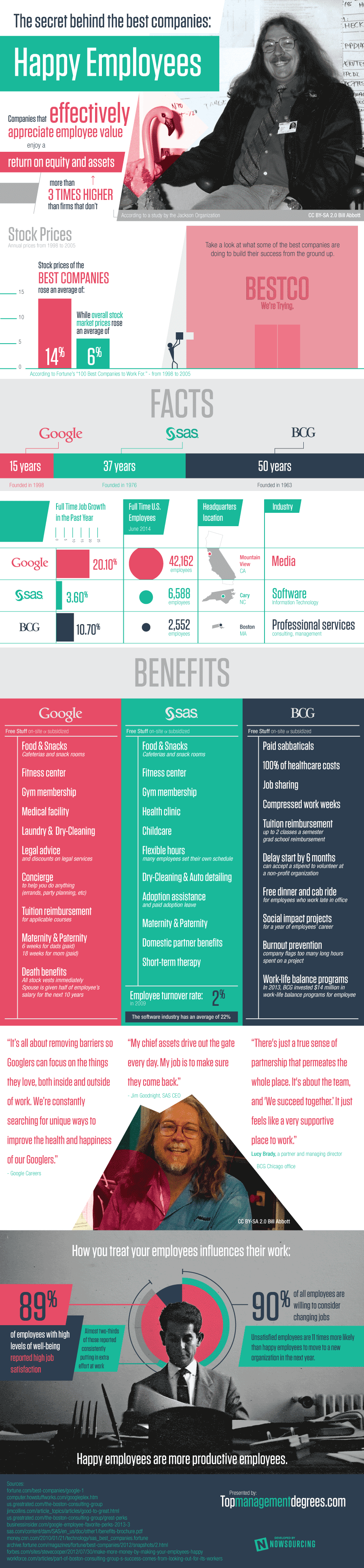
Cool Infographic: What Top Companies Get Right

Once in a while a very cool link ends up in my inbox--this one is from Top Management Degrees and looks at what top companies do right. Check it out:

What Top Companies Do Right
Source: TopManagementDegrees.com

Tuesday, August 05, 2014

Job Rotation: Can it Work for Your Organization?

In this issue of Astronology we explore job rotation. Has your organization used job rotation as an employee development tool?  If not, now is a great time to learn how it can help your organization to be successful!
               
In short, job rotation is an employee development tool used to help employees to develop skills of a wide variety of areas in an organization.  After spending some time learning a position, the employee moves to another role in the organization.  This pattern may continue for several months, or perhaps a few years, depending on the employee’s skill set and level in the organization.  There are many advantages to job rotation, including

  •         Overall employee development,
  •         Development of knowledge, skills, and techniques for how to handle various levels of responsibilities,
  •         Minimizing job boredom / job dissatisfaction,
  •         Promotion preparation
  •         Decreasing work burnout, and
  •         Increasing employee motivation and appreciation of organizational roles.
Workers’ Compensation expert Jon Coppelman remarked that when implementing job rotation in the garment industry, “The somewhat hidden benefit in this was that, when the workload increased in one area, or when someone went out sick, they had people who were cross-trained on a variety of machines so they were not short-staffed in one particular area; I don’t see any downside to people having a wider skill set, other than perhaps, increased training costs,”

What are some drawbacks of job rotation? From a labor relations perspective, experienced employees may not be pleased with revisiting entry-level positions.  Organizations that have unions may need to look into how collective-bargaining agreement clauses could encumber some job rotation programs. Naturally, overtime pay can also be an issue if not handled properly. Another concern can be quality of work. Work done by a new trainee vs. work done by a trained worker can be completely different.  Depending on the type of work and the sensitivity of the end result, some positions may not be well suited for job rotation.

Things to consider when establishing a job rotation program


·     “Job Rotation must start with an end goal: If the goal is for all the employees to be crossed-trained to do every job, the structure will have to be carefully created to avoid issues related to overtime and unions. If the goal is to train employees for eventual promotion, or to decrease job boredom, the structure will be different in regards to frequency and extent of work.
·     
“Job rotation must be carefully planned”: This links back to the original program goal.  One series of questions to consider are

o   How will the program measure employee participation?
o   Will it be mandatory or optional?
o   What restraints will be placed on it?
o   Will employees pick out the areas where they would like to learn more?
o   What policies will need to be put in place to avoid abuse of the program, as well as protect employees from becoming overwhelmed?
o   Of what legal obligations do I need to be mindful?

·     “Employees are able to assess whether the job rotation is achieving the goals”: Making the program transparent will help employees to see how well they are doing. How will you make the program transparent enough for the employees?

·     “A mentor, internal trainer, or supervisor / trainer is provided at each step of the job rotation plan”: This additional support communicates seriousness and can assure to the employee that his / her time is valued. It also ensures for the organization that the employee completes the goals outlined for the job rotation program.

·     “Written documentation, an employee manual or online resource enhances employee learning”: Job descriptions are a must, but outlines for job rotation will also be helpful.

Now that you’ve learned more, will you consider job rotation as an option for job development in your organization? If so, how do you plan to implement it? Share your thoughts with Astron!

Monday, August 04, 2014

Dilbert Monday

It was so popular last week, I decided to make it a weekly occurrence. Have you heard a job description that sounded like this before?

Monday, July 14, 2014

Dilbert on a Monday

This one made me laugh. Hoping that it helps you get over your "Case of the Mondays!"


Friday, July 11, 2014

Astron Activities!

In this issue of Astronology we will look into the activities some of the Astron staff will be participating in over the next few months.  We hope to see you at one or several of these events!

ASAE Annual Conference
August 9-12, 2014 Nashville, Tennessee
Join the Astron team at the Music City Center in Nashville, Tennessee as they participate in the American Society of Association Executives (ASAE) annual conference! Early registration ends July 9th 2014! 
Astron will be in booth #235, so please be sure to stop by and say hello!

CNY SHRM Survey Debrief
On August 21st, Astron National Director Jennifer Loftus will conduct her annual survey debrief to the Central New York SHRM (CNY SHRM) chapter in Syracuse, NY.  Attendance is limited to survey participants.  If you want to hear about the latest trends in compensation, participate today!  The survey can be found at http://astronsolutions.net/surveys/cny2014/.

Green Mountain Payroll Meeting
On September 10th, Astron team member Michael Maciekowich will be a guest speaker at the Green Mount Payroll Association one day conference in Burlington, VT! Come here him speak on designing an effective total rewards strategy. Sign up soon, there is limited spacing for this event!

CEA Survey Debrief
On September 16th, Jennifer Loftus will conduct her annual salary survey debrief to the Cement Employers Association during their annual gathering.  This year’s event, limited to CEA members, will be held in Savannah, GA.

New York State SHRM Conference
Have you wondered how you can engage your employees in a new and innovative way? One avenue organizations are exploring is Gamification.  Astronology discussed the growing popularity of gamification in a previous article. On September 28-30, 2014 Michael Maciekowich will be a guest speaker in Buffalo, NY at the New York State Society for Human Resource Management’s annual conference. Michael Maciekowich will be speaking on Gamification and the use of it in Human Resources. Register today to hear him speak!

2014 Upstate NY Healthcare HR Conference
From October 8 – 10, The American Society for Healthcare Human Resources Association (ASHHRA) Upstate New York Healthcare Human Resource chapter will be hosting its annual conference. The Astron team will be in attendance and look forward to seeing many of our friends in the Healthcare industry! The conference will be located at the Woodcliff Resort & Spa in Fairport, NY.

Wisconsin State SHRM Conference
Looking for a way to gain more knowledge on HR topics and policies? The Wisconsin State Society of Human Resource Management will be holding its conference at the Monona Terrace Convention Center in Madison, Wisconsin. The conference will be held October 15-17, 2014. In addition to exhibiting, Michael Maciekowich will present “Gamification in Human Resource Management: An Introduction.” He looks forward to seeing you!

As you can see Astron will be on the road several times throughout the summer and into the beginning of fall. Will you be near any of these locations? Consider stopping by and saying hello to the Astron team! For future updates on Astron’s travels, check out our Astron Roadshow page!

Tuesday, June 24, 2014

Six Months on Capitol Hill – Five Potential Laws You Need to Know

In the last issue of Astronology, we explored three pieces of legislation with the potential to impact Human Resources: the Achieving Less Excess in Regulation and Requiring Transparency Act (ALERRT), the Family and Medical Leave Inclusion Act, and the Department of Commerce and the Workforce Consolidation Act.  Continuing our review of Human Resources impacting legislation being considered and written on Capitol Hill, Astronology highlights five more bills circulating in Washington, D.C.

4. Equal Employment for All Act of 2013
Introduced in the Senate on December 17, 2013, this bill would amend the Fair Credit and Reporting Act (FCRA) to prohibit employers from requiring credit history of potential employees as part of the job application process. Under the law, employers cannot use consumer credit reports of prospective and current employees for hiring purposes or for taking negative action. Senator Elizabeth Warren (D-Mass), states “A bad credit rating is far more often the result of unexpected medical costs, unemployment, economic downturns, or other bad breaks than it is reflection on an individual’s character or abilities; families have not fully recovered from the 2008 financial crisis, and too many Americans are still searching for jobs. This is about basic fairness --- let people compete on their merits, not on whether they already have enough money to pay all their bills.” She adds, “It makes no sense to make it harder for people to get jobs because of a system of credit reporting that has no correlation with job performance and that can be riddled with inaccuracies.”

5. Family and Medical Leave Enhancement Act of 2014
This bill, presented in February 2014 by Congresswoman Carolyn B. Maloney (D-NY), would amend the Family and Medical Leave Act (FMLA) to cover employers with 25 or more employees, lowering the current 50 employee threshold. “No one should have to fear that they’ll lose their job if they need to take medical leave or care for a family member; the landmark Family and Medical Leave Act sought to end that insecurity by guaranteeing 12 weeks of unpaid leave. Unfortunately, nearly 40% of workers are not covered by that law because they work in businesses with fewer than 50 employees…Every American deserves the rights afforded by the Family and Medical Leave Act and this legislation would help us reach that goal.” The amendment also seeks to add reasons for which FMLA leave can be taken, including:
  •  participating in a child or grandchild’s community program or school activity,
  •  meeting routine medical needs for one’s self, child, spouse, or grandchild, and
  •  attending to the needs of the employee’s elderly relatives, including nursing / group home visits.
6. Paycheck Fairness Act
A bill that continues to make its appearance in Congress is the Paycheck Fairness Act. With its reintroduction, the bill was intended to shrink the pay gap between men and women. The sponsors (Senator Barbara Mikulski, D-Md.; Representative Rosa DeLauro, D-Conn.) believe that because women earn 77 cents for every dollar earned by a man for equal work, there must be corrective action taken to fix the disparity that can cost women over the cost of their careers approximately $434,000 on average. In April 2014, the bill was once again outvoted for further discussion from the Republicans and one Independent present.  According to the Washington Post, Republicans support equal pay for equal work.  However, the bill would increase civil lawsuits.  To the Republicans, the bill is unnecessary because discrimination based on gender is already illegal.

7. The Social Networking Online Protection Act (SNOPA)
A reintroduced bill on February 6, 2013, SNOPA is designed to protect employees from divulging their personal information on their social network profiles. It would prohibit institutions such as places of employment and educational institutions from requiring users to relinquish their log-in information (user name and / or password, etc.).  The law would also protect employees from being punished for refusing any such request.  Although the federal government has been slow in this area, states have already begun motioning on creating such laws.  Maryland, for instance, is the first state to prohibit employers from requesting / accessing social media passwords or gaining access to the social media accounts of prospective and current employees. We have yet to hear anything else on this law; sometime in 2014 it could reappear given the activity at the state level.

8. Employment Non-Discrimination Act (ENDA)
The Employment Non-Discrimination Act (ENDA) is a bill that would add sexual orientation and gender identity to the list of protected classes for employment discrimination prohibitions. Previously introduced, the ENDA would make it illegal for an employer with 15 or more employees to:

1. Refuse to hire or fire any individual due to their actual or perceived sexual orientation or gender identity. It would also make it illegal for an employer to discriminate with respect to their compensation and terms of employment.

2. To classify, limit or segregate applicants or employee in any manner that would deny an individual employment because of a person’s actual or perceived sexual orientation or gender identity.

The ENDA was passed in the Senate and awaits a vote by the House. As of current, 21 states have passed laws that prohibit employment discrimination based on sexual orientation, while 19 states also prohibit gender identity.  We shall see, perhaps in 2014, the House’s response to the ENDA.


What other potential laws have you on your toes?  Write to Astronology! We’d like to hear your input on current Human Resource laws and possible future legislation.

Tuesday, June 17, 2014

Tips from a Job Interview Pro

The Wall Street Journal had a very interesting Q&A last week with Sofia Faruqi who went on over 100 job interviews. I found her answers really interesting for not just job seekers but interviewers as well. You want to make sure that the job seeker feels comfortable with the questions you are asking but that you actually challenge them to answer important questions. Here are a few parts of the Q&A that I thought would be helpful for Human Resources and all who are interviewing to take notice of:
WSJ: Over the course of 100 interviews, you’ve been asked a lot of questions. Which ones caught you by surprise?
Faruqi: The ones that caught me by surprise were the ones that were either really good or really bad. Some of the best that I’ve been asked were: “What values did you grow up with? What makes you proud of who you are?” Also, “What’s the most exaggerated point on your résumé?”
WSJ: That last one is bold.
Faruqi It’s a good question, because all résumés have some level of exaggeration. It’s really good to just ask that outright. In terms of the worst questions, one was “Your resume says you speak French. So, let’s do this interview in French.” Another horrible one was, “Will you go out with me?” That only happened once, so it’s a very rare thing to happen, but not great. You always have to keep your composure, no matter what happens....
WSJ: The rest of your interviews would have been by phone or video. What are the challenges of those mediums?
Faruqi: In a phone interview it helps to remove distractions and put yourself in a position where you are focused. Right now, my office door is closed, so there are going to be no interruptions, my computer screen is blank, so there are no pop-ups or e-mails or other distractions. This way, I can focus on our conversation. 
That is some good advice there for both interviewers and their interviewees. For those who do a lot of interviews, do you have questions you try to use to surprise the candidate or do you try to keep the questions very basic? When you conduct a phone interview, do you make sure to eliminate all distractions as well or do you think that's only a requirement for the job seeker? Just a few things to think about the next time you have a job seeker at the other end of the table or the phone call.

Friday, June 13, 2014

Apex Award Winners Once Again

Some good news to share on this Friday: Astron Solutions has won four 2014 Apex Awards for Publication Excellence!  This blog, our website (http://astronsolutions.net/)Astronology, and Skylines by Astron each won one award! Congrats to everyone at Astron and all the Apex Award Winners for 2014!

Thursday, June 12, 2014

Six Months on Capitol Hill – Three Potential Laws You Need to Know

The first half of 2014 is almost in the books!  In this two part series, Astronology will examine eight current hot topics from our federal government that directly affect Human Resources.  In part 1, we will cover three federal bills and regulations currently being considered.

As in 2013, we’ve noticed a political impasse due to a predominately Republican U.S. House of Representatives and a predominately Democratic U.S. Senate.   However, that political division does not mean a complete lack of legislative activity.  Of what laws and bills should Human Resources practitioners be aware?

1. Achieving Less Excess in Regulation and Requiring Transparency Act (ALERRT)
The House passed this collection of four previous bills in March 2014. The compilation includes the following:

The All Economic Regulations are Transparent Act (ALERT)
This bill promotes transparency by requiring the Office of Information Affairs to publish details about pending rules & regulations and related cost benefit information online.  According to the bill’s introducer, George Holding, “When faced with new regulations, small business owners must consider how it will affect every aspect of their business, such as workers’ wages and hours, hours of operation, and daily costs and processes. In order for our economy to grow and businesses to prosper, we should take steps to ensure that they are given sufficient notices of regulation, and have time to adjust their business practices in anticipation of regulatory changes. This bill increases government transparency by requiring the administration to fully detail the effects of regulations and make things easier on small business owners.”

The Regulatory Flexibility Improvements Act
This bill enhances the Regulatory Flexibility Act by eliminating possible loopholes that agencies have used to avoid compliancy, requiring initial and final regulatory analyses to consider the costs new rules would impose on business indirectly.

The Regulatory Accountability Act
This bill promotes transparency with early engagement by stakeholders in the rulemaking process, including businesses and nonprofits.  This will result in increasing public input.

The Sunshine for Regulatory Decrees and Settlements Act
This bill would prevent secret settlement deals by making it law for an agency seeking to enter a consent decree or settlement agreement to publish it in the Federal Register and online 60 days after it is filed in court. Details in the publishing would have to include the basis for the decree or settlement agreement, description of the terms, and whether it includes attorney fees.

2. Family and Medical Leave Inclusion Act
A bill that failed to pass in the last session of Congress, the Family and Medical Leave Inclusion Act would extend to employees unpaid leave to care for a(n): 

  •   Same sex spouse or partner
  •   Parent in law
  •   Adult child        
  •   Sibling
  •   Grandchild
  •   Grandparent
As of July 8, 2013, this bill had been referred to the Subcommittee on Workforce Protections. At some point in 2014, we may hear more.  Stay tuned, as passage of this law could have great impacts on your organization.

3. Department of Commerce and the Workforce Consolidation Act
Introduced in December 2013, we look forward to hearing more on this bill designed to combine the Department of Labor, the Department of Commerce, and the Small Business Administration. The hybrid departments would be named the Department of Commerce and Workforce. Proposed by Richard Burr (R-North Carolina), and co-sponsored by Senator Daniel Coats (R-Indiana), the Department of Commerce and Workforce would still have its independent functions of the departments but also effectively combine their administrative offices. Burr says, “Duplicative programs cost the federal government staggering amounts of money every year; The president has proposed merging and consolidating federal agencies several times over his two terms, and this bill advances that proposal. Combining offices with similar functions within these two agencies is a common-sense approach that reduces wasteful spending and would streamline our approach to comprehensive economic policy."

In the next issue of Astronology, we will discuss five legislative hot topics in Human Resources, including the Paycheck Fairness Act, the Social Networking Online Protection Act, and the Employment Non-Discrimination Act.

Stat Counter